
In an industry often associated with short lifecycles and large amounts of waste, the most sustainable exhibition stand is frequently the one that already exists.
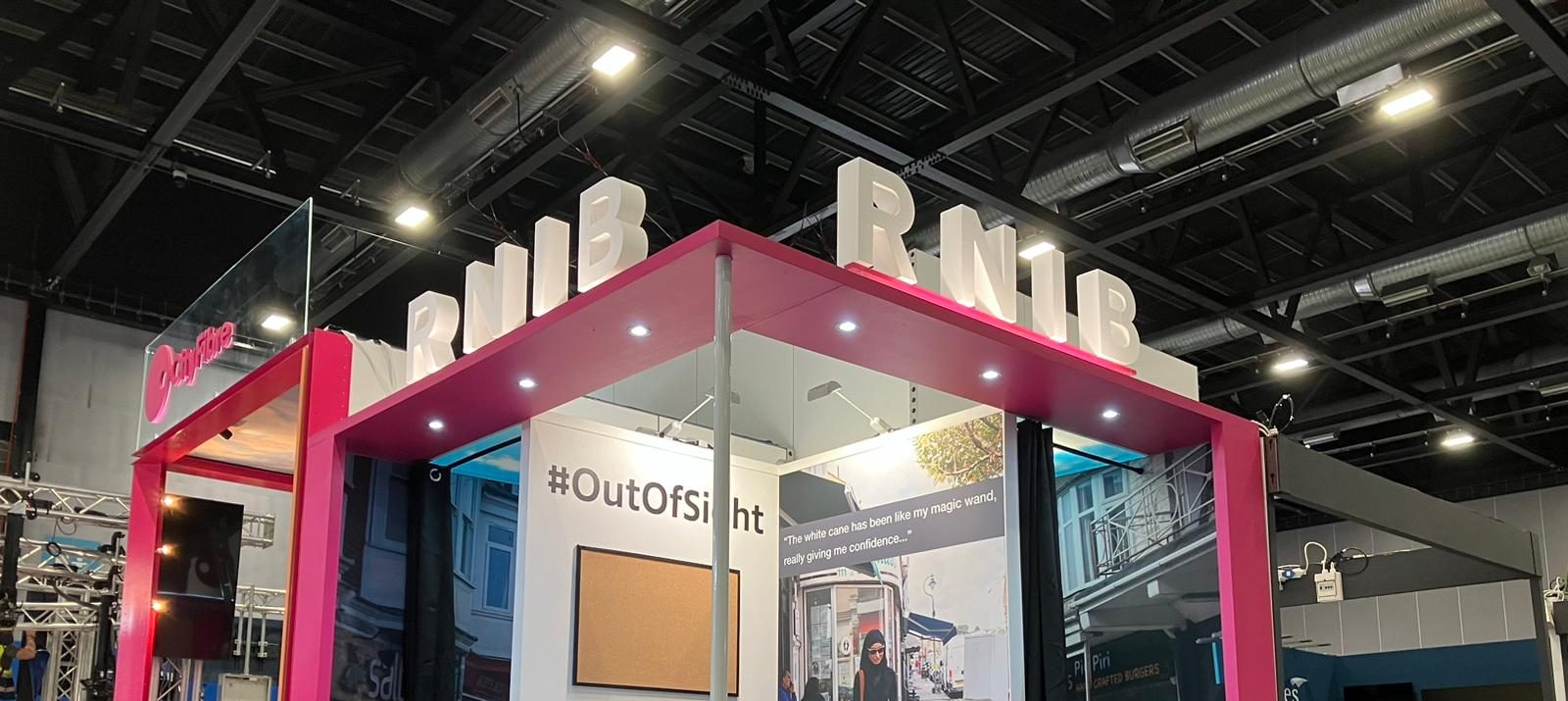
The RNIB stand shown here is a perfect example of how ExhibitMode made thoughtful designs to maximise return on investment, reduce environmental impact and still create a fresh visitor experience across multiple events.

We originally designed the stand as an immersive awareness and engagement space, then successfully used it across three separate exhibitions before responsibly recycling it at the end of its lifecycle. Along the way, it also received industry recognition through an award win, proving that sustainable design and creative excellence can go hand in hand.
Designing for Longevity
Too often, companies create exhibition stands for a single event, making a strong impact for a few days before dismantling and discarding them. While this approach can sometimes be appropriate, it is rarely the most sustainable or cost-effective solution. From the outset, Exhibitmode designed this RNIB stand differently.
The objective was to create a powerful experiential environment that could travel between multiple events while maintaining its visual impact and visitor engagement. We considered every major component not only for aesthetics, but also for durability, transportability and future reuse.
The stand’s modular framework, structural canopy, graphics, reception counter and experiential walk-through areas were all designed to withstand repeated installation and dismantling cycles without compromising quality.
Creating a Fresh Experience Every Time
One of the common concerns exhibitors have when discussing reuse is the fear that visitors will see the same stand repeatedly. In reality, a well-designed exhibition stand should function more like a retail environment than a disposable marketing asset.
For RNIB, ExhibitMode made sure that the core architecture remained consistent, but that the content, messaging, visitor journey and engagement elements evolved between events. New graphics, updated campaign messaging, refreshed storytelling panels and different visitor interactions ensured that the stand continued to feel relevant and engaging.
The structure became a platform rather than a fixed design. This approach delivered significant cost savings while allowing the organisation to maintain a consistent and recognisable presence across multiple exhibitions.

Sustainability Through Smart Design
Sustainability is often discussed in terms of materials, but true sustainability starts much earlier in the design process.
By reusing the stand three times, ExhibitMode and RNIB significantly reduced:
- Material consumption
- Manufacturing requirements
- Transportation emissions associated with producing new structures
- Waste generated after each event
- Overall campaign costs
The environmental savings achieved through reuse frequently outweigh the benefits gained from selecting a more sustainable material for a single-use stand.
This project demonstrates an important principle: reducing consumption is often more impactful than simply changing materials. ExhibitMode took the brief to another level.

Award-Winning Results
Perhaps the strongest validation of this approach is that the stand did not achieve sustainability at the expense of creativity. The project went on to win an industry award, recognising both its effectiveness and its innovative visitor experience.
The stand successfully immersed visitors in the challenges faced by people living with sight loss, creating a memorable and emotional connection with RNIB’s message. Its pragmatic nature generated strong engagement while maintaining clear brand visibility and practical functionality.
Winning an award while simultaneously delivering a multi-show lifecycle highlights an important shift within the exhibition industry: ExhibitMode considered the sustainability and standout design which are no longer competing objectives. The best projects increasingly achieve both.
Final Stages
Even the most successful exhibition stand eventually reaches the end of its useful life.
After three exhibitions, the RNIB stand was carefully dismantled and its materials responsibly recycled wherever possible. Because sustainability had been considered from the beginning, the end-of-life process was significantly easier than it would have been with a traditional one-off build.
This final stage is often overlooked but forms an important part of the overall sustainability journey. Designing with disposal, recycling and material recovery in mind helps ensure that exhibition assets continue to provide value even after their final event.
Looking Ahead
As clients become increasingly focused on sustainability, exhibition designers and builders have an opportunity to rethink how stands are conceived.
The question should no longer be, “How impressive can we make this stand for one event?”
Instead, it should be:
“How many successful events can this stand support while continuing to deliver an outstanding visitor experience?”
The RNIB project demonstrates that with intelligent planning, strong creative thinking and a commitment to sustainability, sustainable exhibition stands can remain visually exciting, commercially effective and environmentally responsible throughout their lifecycle.
Three exhibitions. One award-winning design. Maximum impact with minimum waste.
That is what sustainable exhibition design should look like.